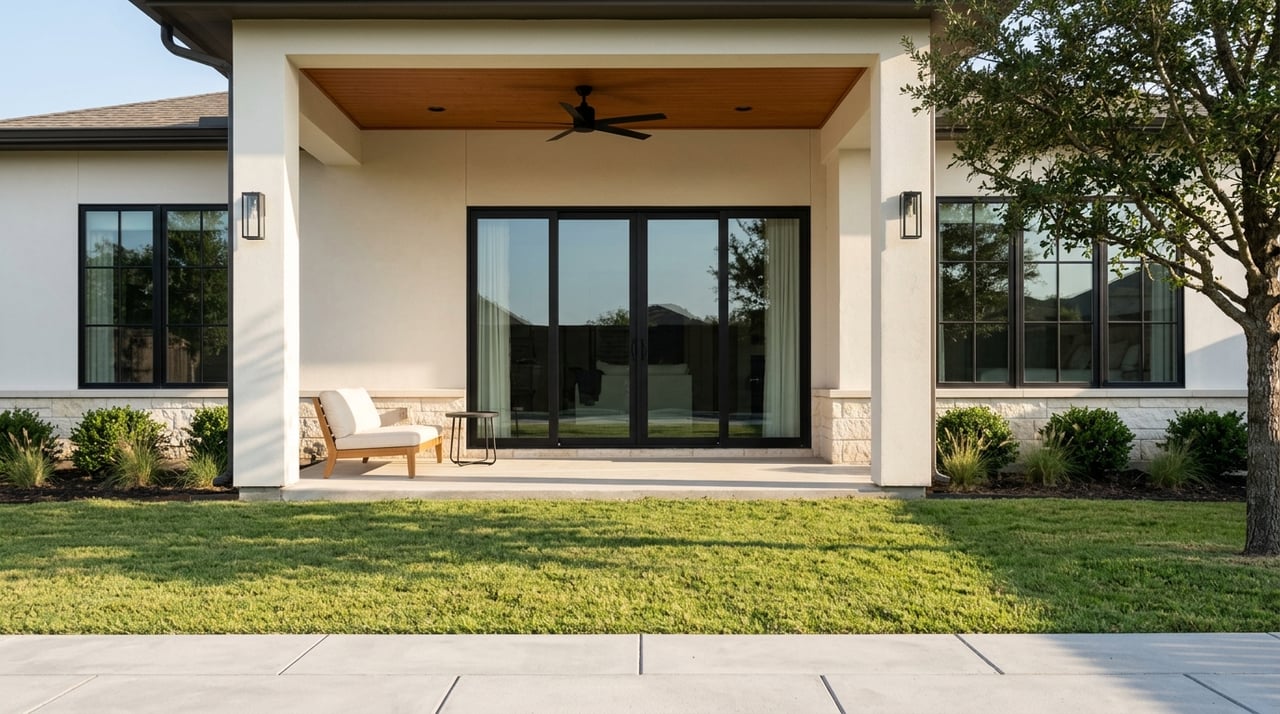
Sienna New Construction Homes for Move-Up Buyers
May 14, 2026
May 14, 2026
Thinking about your next home in Sienna, but unsure whether new construction is the right move? If you are ready for more space, a better layout, or a home that fits your life today, Sienna gives you a wide range of options to compare. From homesites in multiple size categories to quick move-in inventory and builder incentives, there is a lot to sort through, and this guide will help you do it with more clarity and confidence. Let’s dive in.
Sienna is one of the largest master-planned communities in Fort Bend County, and that scale matters when you are trying to move up without leaving behind convenience. Johnson Development describes the community as planned for more than 16,500 homes and more than 5 million square feet of non-residential space, with more than 3,000 acres devoted to parks, golf, recreation, lakes, and green space.
That bigger community footprint gives you more than just homes to choose from. Sienna also includes on-site retail and restaurants, a public library, access to Houston via the Fort Bend Parkway Toll Road, and eight on-site Fort Bend ISD schools serving grades K through 12.
For many move-up buyers, that combination is the appeal. You can pursue a larger home, a different floor plan, or a more premium homesite while still staying in a community with established amenities and everyday convenience.
One of the biggest strengths of Sienna is variety. The current builder lineup includes Beazer Homes, Chesmar Homes, David Weekley Homes, Highland Homes, J. Patrick Homes, Jamestown Estate Homes, Newmark Homes, Partners in Building, Perry Homes, Shea Homes Houston, Toll Brothers, Tri Pointe Homes, and Westin Homes.
That builder mix gives you options at several price points and homesite sizes. Sienna’s home search also separates model homes, move-in ready homes, and builder incentives, which makes it easier to compare whether you want a home that is already completed or prefer to start with a floor plan and build from there.
Sienna reports a 2024 median new home price of $515,000. At the same time, current listings span from the low $300s to more than $1.1 million, so the right fit often comes down to how much space you want inside, how large a lot you prefer, and how flexible your budget is.
If you are moving up from a smaller home, the biggest pricing shift in Sienna often comes from the homesite category rather than just the builder name. Current offerings range from 40-foot homesites up to 100-foot homesites, and each step up can change both the home’s footprint and your outdoor space.
Smaller homesites can still give you a fresh layout and newer finishes without pushing your budget too far. Larger homesites often appeal to buyers who want more separation, a wider home design, or more backyard space.
Here is a simple way to think about the current range in Sienna:
| Homesite width | Current starting range |
|---|---|
| 40' to 42' | From the mid $300s |
| 45' | From the high $300s to mid $400s |
| 50' | From the mid $400s to mid $500s |
| 55' to 65' | From the low $500s to mid $700s |
| 70' to 100' | From the mid $600s to $1.1M+ |
If you are a classic move-up buyer, the sweet spot is often in the 50-foot to 65-foot range. That is where many buyers find a better balance of square footage, layout flexibility, and lot size without jumping all the way into custom-level pricing.
Sienna’s model-home page shows active model homes in neighborhoods such as Bees Creek Crossing, Cottage Place, Crescent Creek, Discovery Cove at Anderson Springs, Forest Lake, Forest Landing, Heritage Park, The Estates at Summerhouse Lake, Valencia Bend, and Vineyard Shore.
The site says 13 builders have created 27 professionally appointed model homes, all open today. For you, that means you can compare design styles, room flow, finish levels, and lot placement in person instead of relying only on floor plans online.
This is often the most important decision for move-up buyers. In Sienna, you can choose between move-in ready homes and homes that are still in the planning or construction phase.
If you want to shorten your transition, a quick move-in home may be the cleaner path. You can usually evaluate the actual finishes, get a clearer sense of timing, and potentially reduce the overlap between buying your new home and selling your current one.
If you want more personalization, building from the ground up may be worth the longer timeline. That route can give you more control over floor plan choices, structural options, and interior selections, but it also requires more patience and a stronger plan for how your current home sale fits into the timeline.
A move-in ready home may be a good fit if you:
Building may be a better fit if you:
Sienna does not publish one universal build timeline, so timing can vary by builder, homesite, and whether the home is already underway. That is why side-by-side comparison matters so much.
The base price is only part of the picture. As you compare new construction in Sienna, it helps to budget for closing costs, moving expenses, and the first wave of setup costs after you move in.
Consumer guidance cited in the research report notes that closing costs typically run about 2% to 5% of the purchase price, separate from your down payment. It also recommends setting aside funds for moving, repairs, and other early ownership expenses.
In Sienna specifically, you should also factor in HOA dues and taxes. Sienna’s HOA and tax page states that non-gated neighborhoods have 2026 HOA dues of $1,580 annually, while tax rates are neighborhood and MUD specific and can change each year.
Before you commit, look closely at these costs:
That full-picture budget is often what separates a smooth move-up experience from a stressful one.
Builder incentives can be meaningful in Sienna, but they need to be compared carefully. The current builder incentive page shows offers that may be used for closing costs, design-center cash, free upgrades, or interest-rate reduction.
Examples listed include up to $20,000 in savings plus 3% in closing costs from Beazer, $10,000 toward closing costs on select Highland quick move-in homes, $20,000 in financing incentives from J. Patrick Homes, up to $75,000 in flex dollars on David Weekley 65-foot homes, and $70,000 in design-center options on J. Patrick 70-foot homes. These offers can change at any time and are offered by the builders, not the developer.
The key is not just how large the incentive sounds. It is how that incentive helps your overall plan.
Depending on your situation, builder credits may be most useful for:
For many move-up buyers, the smartest use depends on what feels tightest in the plan. If cash to close is the bigger pressure point, closing cost help may matter more than upgraded finishes. If long-term payment is the concern, rate-focused incentives may be more valuable.
If you are building rather than buying completed inventory, a builder may require an upfront deposit or earnest money. The research report notes that buyers should ask under what conditions that deposit is refundable.
It is also important to remember that you are not required to use a builder’s affiliated lender. The research report notes that buyers can shop for lender options and also compare closing-service providers such as title insurance and settlement services.
That flexibility can matter quite a bit. A builder’s preferred lender may come with an attractive incentive, but you still want to compare the total cost, rate structure, and fit for your financial goals.
For move-up buyers, this is where strategy matters most. The challenge is balancing your desire for a better home with the reality of selling the one you already own.
In simple terms, the tradeoff is often time versus customization. If you need the cleanest financing path and the least overlap, selling first may be the safest route. If you want to compress the transition, a quick move-in home can make the timing easier. If you want a full build, you need a plan that can handle a longer and less predictable schedule.
Here are the most practical ways to approach it:
Sell first
Buy a quick move-in home
Build from the ground up
The research report also notes that bridge financing, home equity loans, and HELOCs may be options in some situations when you need to buy before you sell. If you are considering that route, the real question is whether the carrying costs and timing risks fit your comfort level.
A new home can reduce the number of immediate repair surprises compared with an older resale, but it is not the same thing as no maintenance. New construction usually comes with a builder warranty, and the research report notes that many plans commonly provide one year for workmanship and materials, two years for HVAC, plumbing, and electrical systems, and up to 10 years for some major structural defects.
That said, coverage is limited by what the warranty actually includes and excludes. Some appliances may not be covered under the builder warranty, and some smaller cosmetic issues may fall outside coverage, so it is worth reading the warranty details carefully before you sign.
If you are serious about moving up in Sienna, try to compare homes in the same order every time. That keeps you from getting distracted by model-home finishes or one standout feature that may not improve your daily life.
A practical comparison checklist includes:
That process is where local guidance can save you time. When you already know you want Sienna, the goal is not just finding a home you like. It is finding the right fit for your budget, timeline, and next stage of life.
If you are weighing quick move-in homes, builder options, or the best way to line up a sale and purchase in Sienna, Jaime Dossett can help you compare the details and build a move-up plan that feels clear, realistic, and well-managed.
Stay up to date on the latest real estate trends.
I am committed to guiding you every step of the way—whether you're buying a home, selling a property, or securing a mortgage. Whatever your needs, I've got you covered.

Jaime Dossett Group
2800 Kirby Dr. Suite A-206 Houston, TX, 77098